

To build your own Itinerary, click  to add an item to your Itinerary basket.
Already saved an Itinerary?


You are here: Opplev slående vakker natur og spennende kultur > Unique Cultural Experiences in Hjartdal, Sauland,
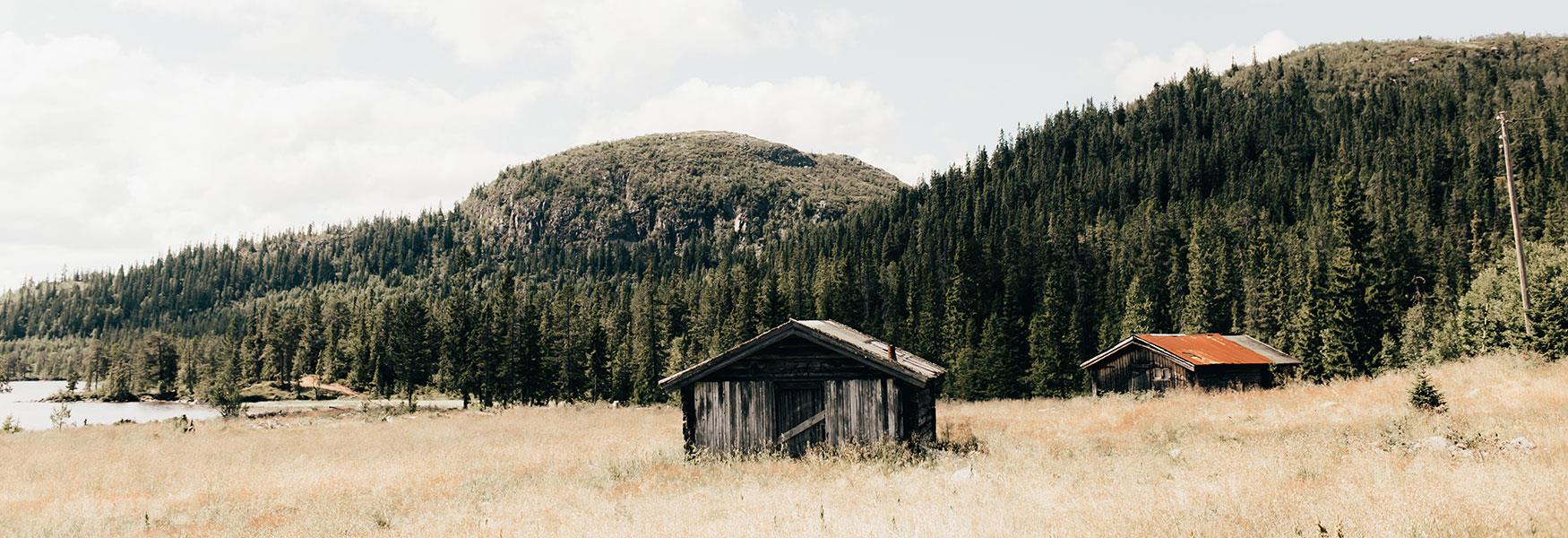
Imagine waking up as a Telemark farmer in the 19th century, participating in the Norwegian Scythe Mowing Championship, or tracing the history of three medieval stave churches. Find peace among old timber farm buildings to the sound of the Norwegian hardingfele (Hardanger fiddle) or on a walk through deep forests.
Hjartdal, Sauland, and Tuddal are overflowing with history and hidden cultural treasures just waiting to be discovered. Travel to this region of Telemark to bring home truly unique and unforgettable memories.
Dive into the history of one of Telemark's most iconic hotels. Tuddal Høyfjellshotell was built in 1895 as a high-mountain sanitarium on the sunny side of Gaustatoppen (1883 m.a.s.l.), where wealthy tourists sought the tranquility of the forest and fresh mountain air.
Acess to Mount Gaustatoppen: The hotel offers immediate proximity to excellent forest and mountain hikes, suitable for everyone, both summer and winter. From the hotel, you can embark on a 6-hour hike up to Gaustatoppen, where you can see one-sixth of Norway on a clear day. Alternatively, driving to the Stavsro parking lot (the most popular starting point) takes only 10 minutes from the hotel.
Antiquities: Discover the hotel's impressive collection of antiques and old furniture, some on display and some still in daily use. The hotel has 20 unique rooms, giving you the feeling of traveling back in time.
Fine Dining: The hotel’s greatest experience lies in its meals. Enjoy exciting wines and local craft beer from "Fjellbryggeriet" paired with an exquisite 4-course menu based on the finest seasonal ingredients.
Babette’s Feast: Join the popular "Babette's Feast" concept, a weekend event featuring a viewing of the Oscar-winning 1987 film, followed by a delicious dinner served as accurately as possible to the Karen Blixen novella. Over 3,000 guests have taken part in this exclusive culinary event.
Café, Grocery store and Bakery: At the hotel’s yard, you can visit "Gildehallen," a café open to all, offering a delicious menu of the best Norwegian traditional food. The "Bakery" sells the hotel's popular flatbread and crispbread, and you can attend baking courses for a unique insight into traditional Norwegian baking craftsmanship. "Zakkæus Landhandel" is the hotel's grocery store, selling house-made food products, home breewed beer, and selected products from local suppliers.


Tuddal Bygdetun is centrally located in the village center and consists of 13 old farm buildings, allowing you to explore what a typical Tuddal farm looked like in the 18th and 19th centuries.
Guided Tours: In July, the museum is open for visitors, offering guided tours of the historic buildings and a deep dive into Tuddal's rich cultural heritage.
Folk Music Heritage: Tuddal has fostered several of Norway's most renowned folk musicians and has been a popular destination for folk musicians across the Nordic region for centuries. The Bygdetun hosts annual concerts and cultural events featuring local musicians, blending both modern and traditional Norwegian tunes.
Accessibility: Tuddal Bygdetun is part of the Norwegian Industrial Workers Museum and can be visited year-round, even outside of the official opening hours.
Join an adventurous walk along the Cultural Trail around Bjårvatn lake and discover magnificent, magical nature where trolls and spirits have roamed for centuries.
Trail Features: This is an easy trip for the whole family and is well-suited for bikes and strollers. The journey starts across the road from the parking lot at Fossehalli in Tuddal.
Mythology: Follow the marked path to learn about the Tuddal Trolls: "Sjuke-Knut" on Njuke, "Fluks" on Flugonfjell, "Lurv" on Lønnås, and "Hakjespett" on Hovdeåsen. If you are lucky, you might even glimpse the Nøkken (Water Spirit) living beneath the Rindebrua bridge.
Amenities: Along the trail, you will find great rest areas with good views. You can also visit Tuddal Church, Tuddal Bygdetun, or grab a pleasant meal at Bøen Kiosk and Café or groceries at Joker Tuddal.
Every summer since 2000, the Scythe Mowing Festival has been organized in Hjartdal. Here, young and old gather to compete in the traditional art of scythe mowing.
Purpose: This traditional method of harvesting grass for winter fodder has largely been replaced by modern machinery. The festival aims to strengthen cultural heritage by hosting a popular event where you can find stalls selling local art and food products, and even participate in the Norwegian Championship in Scythe Mowing (NM i ljåslått).
Competition: The competition is divided into age groups from children (7-12) to adults (over 60). Participants can choose to compete with a short scythe (stutt ljå) or a long scythe (lang ljå). The festival attracts over 500 visitors per day and competitors from 15 counties.
Treat yourself to a unique stay on an authentic Telemark mountain farm, with surroundings that transport you 200 years back in time. Grevijord Fjellgård is centrally located in Tuddal with a lovely view of Bjårvatn lake and the surrounding mountains.
Accommodation: Stay in the Gamlestugu (Old Cabin), which offers modern facilities combined with original antique interiors. This cozy farmhouse has 3 bedrooms and 8 beds.
Activities: Short distances to a variety of summer and winter activities for the whole family, including cultural hiking trails, fishing, swimming, paddling, ski trails, and downhill slopes.
Heritage: The host offers a tour of the farm museum, which tells the story of how farming operations have changed since the Black Death. Grevijord Fjellgård is quality-marked with "Olavsrosa" from Norwegian Cultural Heritage, truly providing the experience of living in mythical Telemark.
Have you ever considered a farm holiday where you can help harvest organic ingredients for your own meal and find peace in a rural setting? At Tjønnås Ecological farm in Sauland, Torild and Gunleik Skårdal offer a complete package of delicious food, nature, and culture.
Stay and Food: Stay in a timber farmhouse with a svalgang (open-air gallery) overlooking the Sauland cultural landscape. Meals consist of organic ingredients from the farm and the surrounding outfields.
Culture: The Skårdal family also provides musical entertainment with Norwegian folk music, featuring instruments like the willow flute (seljefløyte), Hardanger fiddle, and farmer's harp.
Tours: You can take guided tours to discover hidden viewpoints and delve into exciting stories from the small crofts (husmannsplasser) in the area. Tjønnås Økogård accommodates groups of up to 10 people from Thursday to Sunday all year round.
Hjartdal municipality is home to 3 culturally rich churches, one in each village (Tuddal, Hjartdal, and Sauland), all built during the same historical period.
The oldest, Tuddal Church, is a timber log church built in 1796. It is believed that two stave churches previously stood here, the first of which burned down in 1369. The preserved church portal from the first stave church is now housed at the Nordiska museet in Stockholm.
Despite the Hardanger fiddle being considered the "devil's instrument" by many Christians historically, it is an essential part of Tuddal's culture and is an approved instrument in the church today. A memorial stone for one of Tuddal's most significant folk musicians, Svein Løndal (1864–1949), stands by the church.
The second oldest, Hjartdal Church, is centrally located in Hjartdalsbygda. This timber log church was built in 1809 and shares many similarities with Tuddal Church.
Holmskyrkja: A stave church called "Holmskyrkja" from around the 1200s is believed to have stood on the headland where the cemetery is today. Its baptismal font is preserved at the Norsk Folkemuseum in Oslo.
The 1540 Farmer Uprising: A memorial stone by the church commemorates the 1540 farmer uprising. King Christian III demanded resources from Telemark farmers for silver and copper mining. When the farmers resisted, royal soldiers were sent. The farmers laid down their weapons near the church, but five leaders were beheaded on a field called Bråråker (Blood Field). A pillory (gapestokk) by the church offers a glimpse into the brutal past.
Sauland Church is the newest of the three, built in 1859. It replaced a stave church from the 13th century, which was reportedly the largest of the three stave churches in the area.
Historical Art: The portal of the stave church is preserved and displayed at the Museum of Cultural History in Oslo. The famous painting "Gudstjeneste i en norsk landskirke" (Service in a Norwegian Country Church) by Adolph Tidemand from 1845, now hanging in the National Museum, gives an impression of the stave church's interior.
In conclusion, there is no reason to bypass Hjartdal, Sauland, and Tuddal on your next trip through mythical Telemark. Here you will find the very best Telemark has to offer: short-traveled food, fantastic culture, and magnificent nature, all meeting warm hospitality. Are you ready to create new cherished memories?
Ratings & Reviews
Powered By



© Visit Telemark 2026. Copyright


.png)
.png)
